
At opposite corners of London’s Hampstead Heath, one to the south-west and the other to the north-east, two buildings with white exteriors, but little else in common, evoke the Georgian and Regency years.
To the south-west of the Heath, just off South End Road, Keats House (pictured above) preserves the memory of one of the ‘Romantic poets’. John Keats (1795-1821) moved in here in late 1818, at the suggestion of his friend, the playwright Charles Brown. Another family, the Brawnes, shared the house at the same time. Keats wrote several of his most famous poems, such as Ode to a Nightingale, while living here – although his work did not gain widespread acclaim until years after his death.
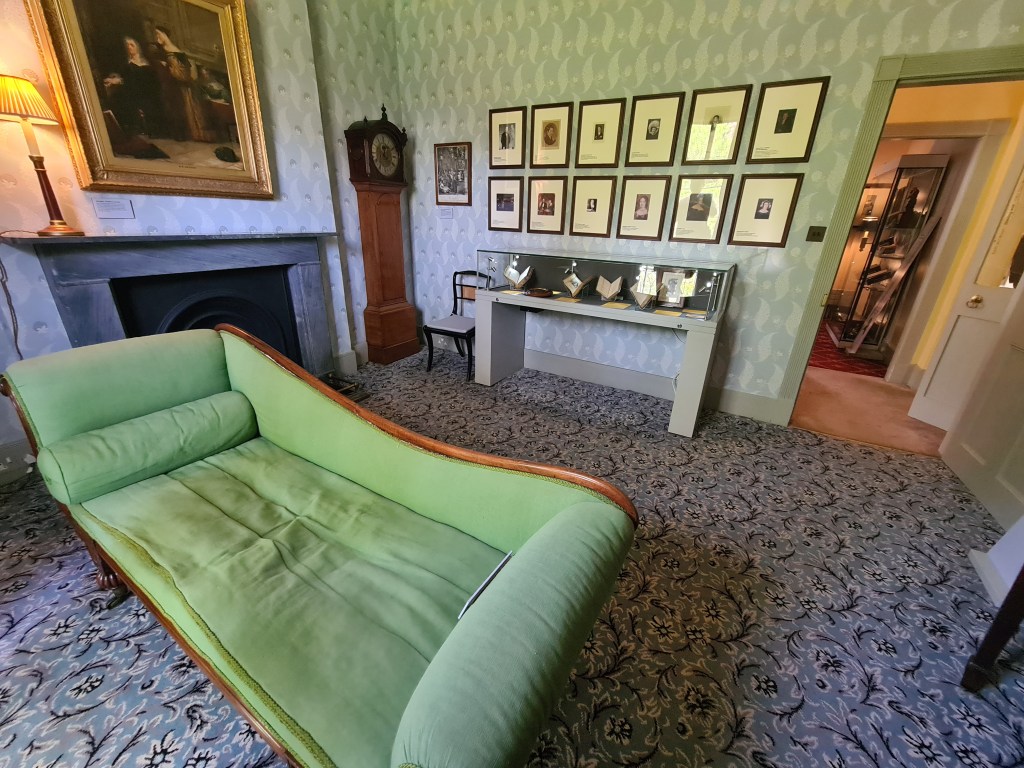
In this small but charming house, you can find out more about Keats’ short, but passionate life: the training he received as an apothecary, before deciding to focus on poetry; the literary and social circles in which he moved; and Fanny Brawne, with whom Keats fell in love before leaving for Italy in late 1820. The ring which Keats gave them, as a sign of their engagement, is on display. After his death in Rome, Fanny mourned him for over a decade, before marrying, travelling widely and having three children.
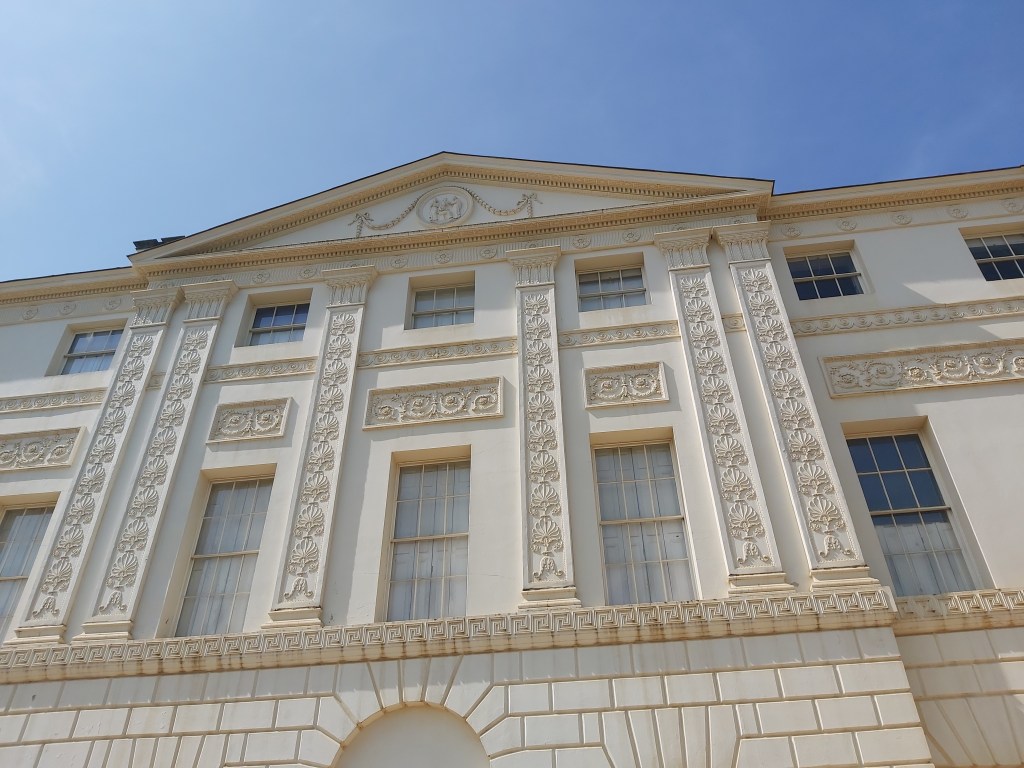
Half an hour’s walk across the Heath brings you to Kenwood House. In contrast to the modest proportions of Keats House and its gardens, this neoclassical villa occupies a vast estate. Kenwood House as you see it today is, to a large extent, the work of Robert Adam, who expanded and redecorated it for the 1st Earl of Mansfield.
The interiors reflect the majestic symmetry and Classical inspiration of much of Adam’s other work. The highlight is the Library or Great Room, which the Earl used as much for entertaining as for study. (Whisper it gently, but there probably aren’t enough books for it to qualify as a great library – in our view, anyway.)

The scale of the room – and the rest of Kenwood – reflects the Earl’s status as Lord Chief Justice. His judgement in a famous case, Somerset v Somerset, helped to begin the slow process of the abolition of slavery.
You may spot a portrait, in more modern style, of Dido Belle – the illegitimate child of an enslaved African woman and a British naval officer who was the Earl’s nephew. While the Earl was not a regular resident at Kenwood – his main home was Scone Palace in Perth – he allowed Dido to grow up in the Kenwood household, with higher status than the servants but lower status than the rest of the family.
The Mansfields sold Kenwood in the early 20th century. The new owner Edward Guinness, 1st Earl of Iveagh, housed his collection of paintings here, including works by Rembrandt, Vermeer and Hals. He donated the house and part of his collection to the nation in 1927. Many Dutch and Flemish Old Master paintings are now on view in the dining room. For a touch of creepiness, visit the Green Room and gaze at ‘Two Girls Dressing a Kitten by Candlelight’ (c.1768-70) by Joseph Wright of Derby. The candlelight later became a trademark of Wright’s paintings.
NB Keats House is free for Art Pass holders, while Kenwood House and its grounds, managed by English Heritage, offer free entry to all.
 Heritage Weekends